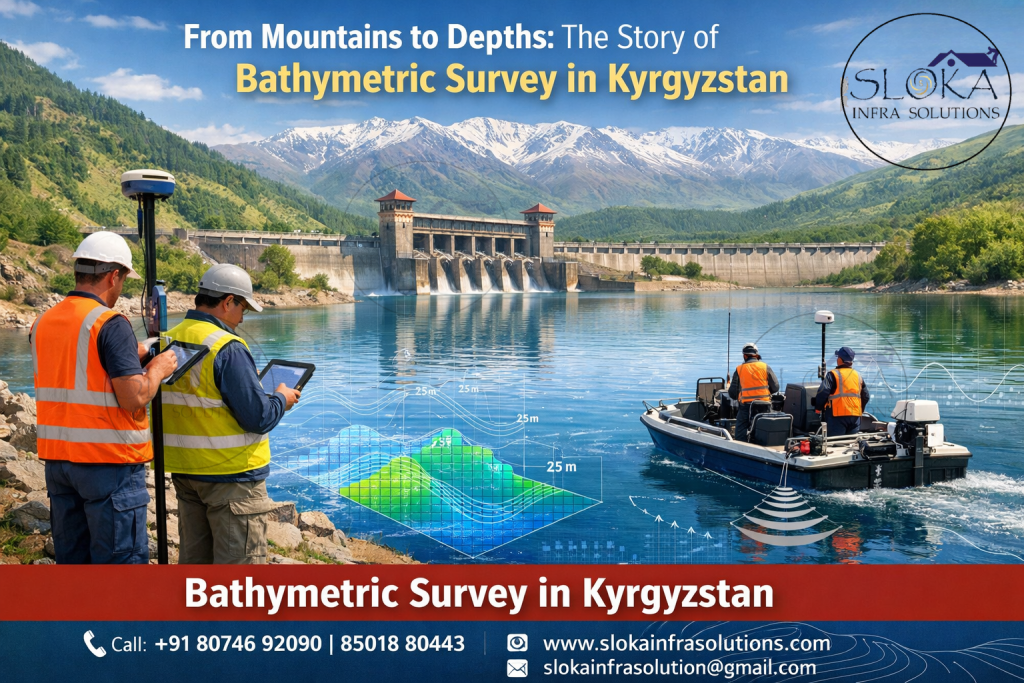
Bathymetric Survey in Kyrgyzstan
From Mountains to Depths: The Story of Bathymetric Survey in Kyrgyzstan:-
Bathymetric Survey in Kyrgyzstan plays a crucial role in understanding the hidden underwater landscape of this mountainous Central Asian nation, where water resources are closely tied to glaciers, rivers, and high-altitude lakes. Because of its rugged terrain and unique hydrological systems, Kyrgyzstan presents both opportunities and challenges for advanced hydrographic surveying. From mapping lake depths to analyzing sediment layers beneath riverbeds, bathymetric surveys are essential for infrastructure planning, environmental protection, and sustainable water management.
Top Bathymetric Survey and Surveyor in Kyrgyzstan
Top Bathymetric Survey and Surveyor in Kyrgyzstan services are becoming increasingly important as the country continues to depend heavily on its extensive network of water bodies, including Issyk-Kul Lake, the Naryn River, and the Chu River. Professional surveyors use advanced sonar technologies and geospatial tools to deliver accurate underwater mapping solutions. These experts contribute significantly to hydropower projects, irrigation systems, and disaster risk reduction in a region where water is both a lifeline and a strategic resource.
Why mapping the underwater world in Kyrgyzstan matters more than ever?
Bathymetric surveying is the science of measuring water depth and mapping the shape of submerged terrain. In a country like Kyrgyzstan, where thousands of rivers and streams flow through mountainous landscapes, understanding underwater structures is critical for multiple sectors.
The nation’s water resources are largely derived from glaciers and high-altitude precipitation, feeding into closed drainage basins and lakes. This makes accurate bathymetric data essential for hydropower development, flood risk assessment, sediment analysis, environmental conservation, and irrigation planning.
The mountainous geography, with elevations ranging from lowland valleys to some of the highest peaks in Central Asia, adds complexity to surveying efforts and requires specialized equipment and experienced professionals.
From Snowcaps to Streams: The Journey of Water in Kyrgyzstan:-
Kyrgyzstan is often called the water tower of Central Asia because of its abundant freshwater reserves stored in glaciers, lakes, and mountain-fed rivers. The country’s hydrography is shaped by the towering Tien Shan mountain system, which acts as a natural reservoir and feeds many of the region’s major waterways.
Several features influence bathymetric surveys in the country:
- Glacial-fed rivers with seasonal changes in discharge
- Endorheic lakes such as Issyk-Kul, which have no natural outlet
- Steep slopes that affect river velocity and erosion
- Climate sensitivity, which impacts water levels and sediment movement
These characteristics make bathymetric surveys an important tool not only for engineering but also for long-term environmental planning.
Technologies Used in Bathymetric Surveying:-
Modern bathymetric surveys rely on a combination of sonar systems, GPS, positioning tools, and geospatial software. The most widely used technologies include:
- Single beam echo sounder systems
- Multibeam echo sounder systems
- Side scan sonar
- Sub-bottom profilers
- Acoustic Doppler Current Profilers, or ADCPs
- Remote sensing and GIS integration
Each of these technologies serves a distinct purpose and contributes valuable insights into depth, seabed structure, and water flow behavior.
Single Beam Echo Sounder Survey:-
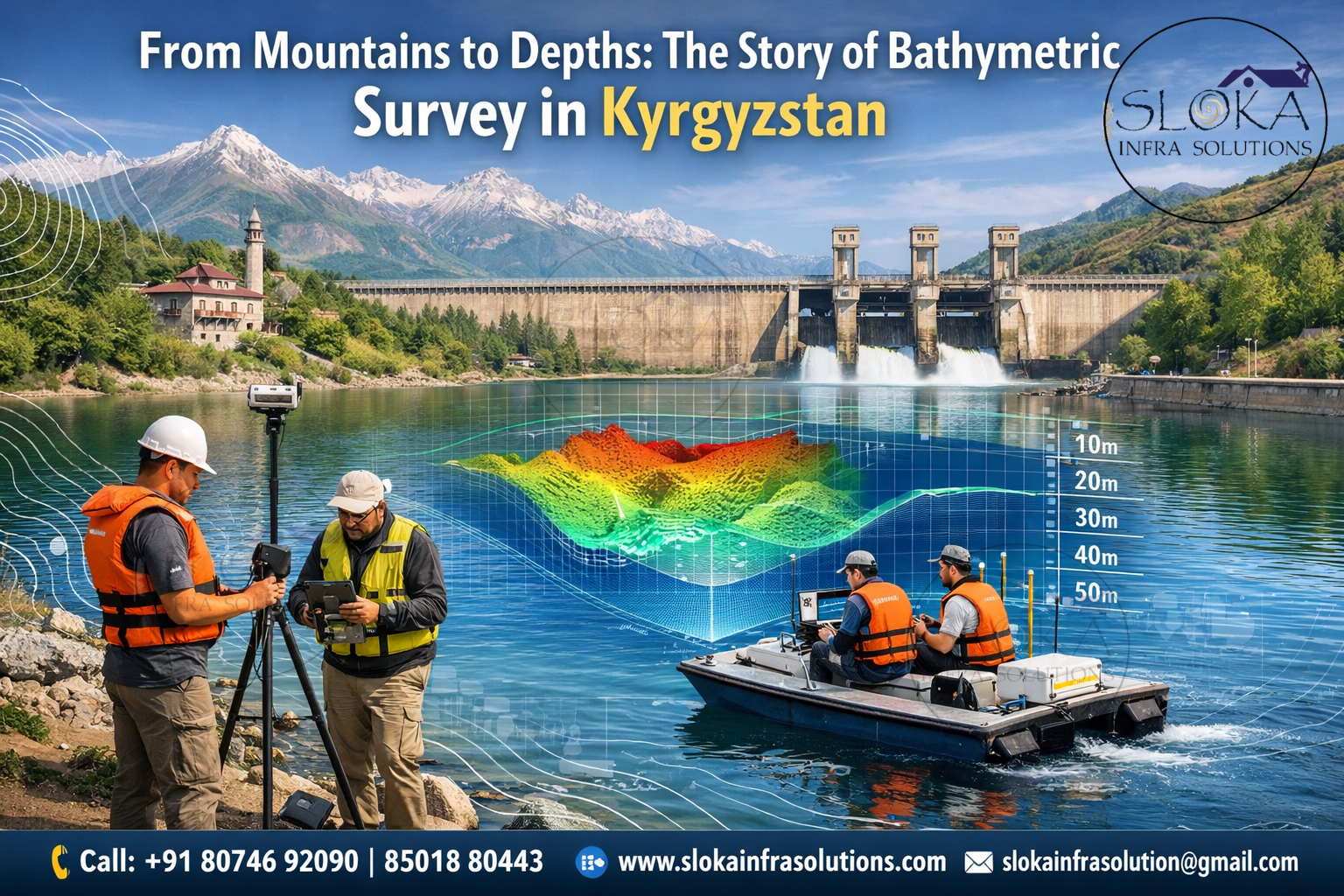
A Single Beam Echo Sounder survey is one of the most traditional and widely used methods in bathymetric surveying. It works by sending a single acoustic pulse directly beneath the survey vessel and measuring the time it takes for the signal to return after hitting the bottom.
In Kyrgyzstan’s rivers and smaller lakes, this method is especially useful because it is simple, dependable, and cost-effective. It is often used in narrow water bodies where localized depth data is sufficient, such as tributaries of the Naryn River or smaller reservoirs used for irrigation.
The advantages of this method include easy operation, lower cost, and suitability for shallow or confined water bodies. However, because it captures data only along a single line beneath the vessel, multiple survey passes are needed to create a complete map. That can make it time-consuming in larger lakes such as Issyk-Kul.
Even with these limitations, Single Beam Echo Sounder surveys remain a reliable choice for preliminary investigations, dredging work, and routine monitoring in different aquatic environments across Kyrgyzstan.
Multibeam Echo Sounder Survey:-
Multibeam Echo Sounder systems represent a major advancement in bathymetric surveying. Unlike single beam systems, multibeam systems emit multiple acoustic beams in a fan-shaped pattern, covering a wide section of the seabed in a single pass.
This technology is especially valuable for large and deep water bodies such as Issyk-Kul Lake. It allows surveyors to create high-resolution three-dimensional maps of underwater terrain, revealing ridges, depressions, slopes, and sediment features with remarkable clarity.
The main benefits include wider coverage, greater detail, and highly accurate terrain modeling. In Kyrgyzstan, multibeam surveys are increasingly useful for hydropower planning, reservoir management, scientific research, and the study of sediment movement in major water bodies.
However, multibeam systems require skilled operators, reliable positioning systems, and advanced data processing. They are more expensive than single beam methods, but the quality and depth of information they provide make them highly valuable for complex survey projects.
Side Scan Sonar:-
Side scan sonar is a powerful tool used to create detailed images of the seabed rather than directly measuring depth. It sends acoustic signals outward to both sides of the survey vessel and records the returning echoes to form high-resolution underwater images.
In Kyrgyzstan, side scan sonar is especially useful for detecting submerged objects, mapping sediment patterns, and identifying underwater hazards. In large lakes like Issyk-Kul, it helps locate debris, geological formations, and features that may affect navigation, construction, or environmental assessment.
One of its greatest strengths is its ability to produce imagery that resembles a photograph of the underwater environment. This makes it useful not only for engineering work but also for ecological studies and archaeological investigations.
Since side scan sonar does not provide direct depth measurements, it is usually combined with echo sounders to create a more complete survey result.
Sub Bottom Profilers:-
Sub-bottom profilers are specialized instruments used to study the layers beneath the seabed. They emit low-frequency sound waves that can penetrate sediment and reflect back from underground layers, allowing surveyors to understand what lies below the surface.
In Kyrgyzstan, sub-bottom profilers are particularly valuable for studying sediment thickness, identifying geological formations, and supporting dam or reservoir projects. Because the country depends heavily on hydropower and water storage systems, understanding what lies beneath the bottom surface is critical for safe and effective infrastructure planning.
These systems also help reveal historical sediment buildup, which can provide clues about erosion, climate variation, and long-term environmental change. This is especially important in glacial-fed systems where sediment transport can vary greatly through the seasons.
Although sub-bottom profiling provides highly useful subsurface information, the data often requires careful interpretation and is usually combined with other methods for a more accurate understanding of the underwater environment.
ADCP Survey:-
An Acoustic Doppler Current Profiler, commonly known as an ADCP, is used to measure water current velocity throughout the water column. It works by sending acoustic signals into the water and analyzing the frequency shift in the returning echoes.
In Kyrgyzstan’s river systems, especially fast-flowing rivers such as the Naryn, ADCP surveys are essential for measuring flow velocity, estimating discharge, and understanding seasonal water movement. These surveys are particularly useful in hydropower development and river engineering because they provide accurate information about how water moves through the system.
ADCP data supports the design of dams, canals, and water distribution systems by helping engineers understand flow patterns more precisely. It is also valuable for flood prediction and river management, especially in areas affected by snowmelt and glacier-fed runoff.
When ADCP data is integrated with bathymetric mapping, it gives a more complete picture of both underwater topography and water dynamics.
Tough Terrain, Tougher Surveys: Working in High-Altitude conditions:-
Conducting bathymetric surveys in Kyrgyzstan is not easy. The country’s natural conditions create several challenges for survey teams:
- High-altitude terrain makes access difficult
- Weather can change quickly and affect survey accuracy
- Remote areas may lack transport and logistical support
- Glacial influence causes constant changes in water levels and sediment load
Another challenge is the lack of a fully unified hydrological database, which has historically made it harder to integrate and compare data. Even so, improvements in GIS, sonar systems, and digital modeling are helping surveyors overcome many of these barriers.

Applications Across Industries:-
Bathymetric surveys in Kyrgyzstan support several major industries and public needs.
Hydropower development depends on accurate depth and flow data for dam design and reservoir management. Agriculture and irrigation rely on river and canal surveys to improve water distribution. Environmental monitoring uses bathymetric information to track sedimentation, habitat conditions, and water quality. Disaster management also depends on underwater mapping for flood assessment and emergency planning.
These applications show that bathymetric surveying is not only a technical process but also a practical foundation for national development.
Building a stronger future in Kyrgyzstan with accurate underwater data:-
The future of bathymetric surveying in Kyrgyzstan looks promising. The growing use of artificial intelligence, machine learning, drone support, autonomous survey vessels, and GIS-based water management systems is changing how underwater mapping is done.
As climate change continues to affect glacier melt, river behavior, and lake levels, the need for accurate and regular survey data will become even more important. Better data sharing, stronger databases, and advanced survey technologies will help the country manage its water resources more effectively.
Looking Ahead: The lasting impact of Bathymetric Surveys:-
Bathymetric Survey in Kyrgyzstan is not just about measuring depths—it’s about uncovering insights that drive smarter decisions for the future. From the expansive waters of Issyk-Kul Lake to the powerful flow of the Naryn River, every water body tells a story that helps shape sustainable development, environmental care, and efficient water management.
As the country continues to evolve, the demand for skilled professionals and advanced surveying technologies will only grow stronger. With its rugged mountains, glacier-fed systems, and ever-changing water dynamics, Kyrgyzstan presents a landscape where accurate underwater data is not optional—it’s essential.
The growing relevance of Top Bathymetric Survey and Surveyor in Kyrgyzstan highlights how critical precise data has become for sectors like hydropower, infrastructure, and ecological planning. Looking ahead, bathymetric surveys will remain a powerful tool in protecting water resources and building a more informed, resilient future.